Cooperative Finance Goes Digital

Digital crowdfunding and crowdinvesting can provide cooperatives with an effective way to combine capital raising, member acquisition and community building. In many respects, the concept is particularly well suited to the cooperative model: the traditional cooperative principle that objectives which cannot be achieved individually can be achieved collectively is transferred into the digital financing environment. Cooperatives can organise campaigns through their own digital channels or make use of professional crowdfunding and crowdinvesting platforms.
Raising Larger Amounts of Capital
Crowdfunding and crowdinvesting serve different purposes. Crowdfunding is often reward-based, similar to a pre-sale, or allows supporters to contribute without receiving a financial return. Crowdinvesting, by contrast, involves equity or equity-like investments and normally offers investors a fixed or performance-related financial return. It is therefore generally suitable for raising larger amounts of capital. Both models can help cooperatives test an idea, finance a project, reach new audiences and develop a community. Importantly, digital campaigns can also be used to attract new cooperative members and thereby strengthen the cooperative’s equity base.
New Regulatory Framework for Cooperatives
The regulatory environment in Germany has changed substantially. Until the end of 2025, the ability of cooperatives to distribute cooperative shares via professional crowdfunding platforms was considerably restricted. Since 2026, regulated platforms holding a licence under §34f of the German Trade Regulation Act (GewO) can facilitate offers of cooperative shares of up to €6 million within a twelve-month period without requiring a full prospectus. For campaigns below €100,000, the prospectus requirement generally does not apply and platforms without a §34f licence may also be used. Between €100,000 and €6 million, investors must receive a Vermögensanlagen-Informationsblatt (VIB), providing key information on the project, risks, membership rights and use of funds. Individual investment limits also apply. Above €6 million, a full prospectus approved by BaFin is generally required. The relevant legal framework is primarily based on the German Cooperative Societies Act and the German Investment Products Act. Since 2025, the subscription of cooperative shares can also be completed entirely digitally.
From Capital Raising to Community Building
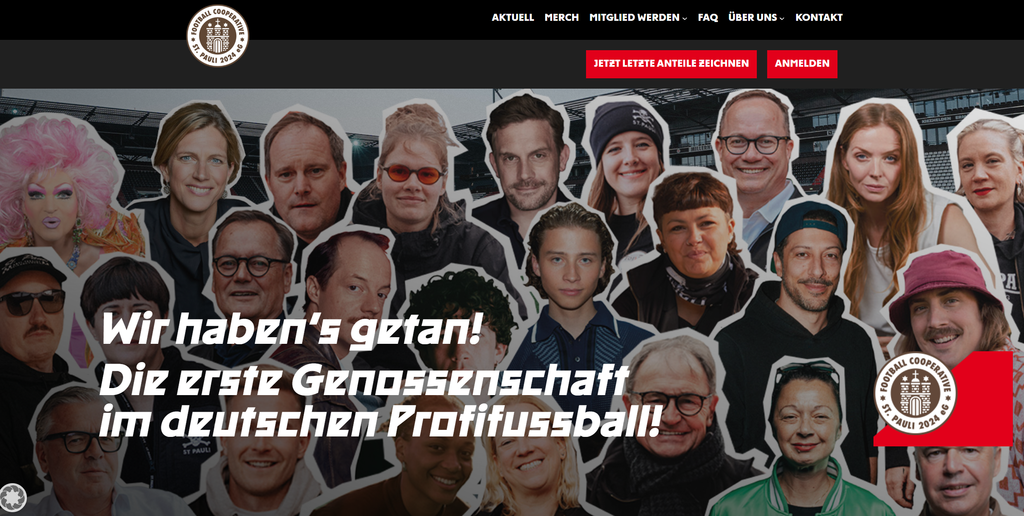
The potential extends beyond financing alone. Well-designed campaigns can increase public visibility, generate media attention, attract new members and allow cooperatives to reach communities that conventional financing channels may not address. The following examples demonstrate the diversity of possible applications. The Krakelee eG used crowdfunding to finance and build a community around a cooperative techno club in Cologne. Euro Plant Tray eG raised €4.5 million through three crowdinvesting campaigns to develop a reusable plant tray system, combining investment opportunities with a circular-economy business model. Other examples range from energy and agricultural cooperatives to European Sleeper and FC St. Pauli, whose cooperative campaign attracted more than 22,600 members and generated more than €29 million in cooperative shares and membership fees.
The Future of Digital Cooperative Finance
These examples illustrate that digital crowd financing can be more than an alternative source of capital. For cooperatives, it can combine financing with participation, ownership and community engagement. The expansion of the German regulatory framework therefore creates new opportunities for professional digital platforms to mobilise private capital for cooperative enterprises while maintaining transparency and investor-protection requirements. In this sense, crowdfunding and crowdinvesting can help modernise the cooperative financing model and make it accessible to a broader digital investor and member base.
More Information can be found here:
https://www.zdk-hamburg.de/blog/2025/12/standortfoerderungsgesetz-neue-chancen-fuer-genossenschaftliches-crowdinvesting/ (Article by Mathias Fiedler, President of the Board of the Association of Consumptive Cooperatives)
Also explore CoopWissen by #GenoDigital for practical insights into crowdfunding and
crowdinvesting for cooperatives (in German).

Title Picture by Alan Aprilio at Unsplash